Panel & Home Power Upgrades
An electrical panel upgrade changes the equipment that distributes power through your home. An electrical service upgrade changes or reconfigures the capacity supplying it. The right path depends on panel condition, existing loads, and what you plan to add. Octopel helps homeowners plan panel, service, subpanel, and circuit work for remodels and new equipment. Replacing a panel does not automatically increase capacity.
- Your panel appears damaged, unsuitable, or short on useful circuit space.
- You are adding an EV charger, heat pump, appliance, hot tub, or workshop equipment.
- A remodel will add several circuits.
- You need power for a garage, addition, or ADU.
- You are planning several future electrification projects.
- You are unsure whether the existing service can support the planned loads.
Your final price is calculated by a manager and depends on:
- Hours of labor required
- Distance to the job site
- Electrician skill level required
- Number of electricians needed
- Urgency of the request
Additional factors that can affect price: materials, service fees, utility company disconnect/reconnect charges, and permits.
Choose the Right Panel or Power Upgrade for Your Home
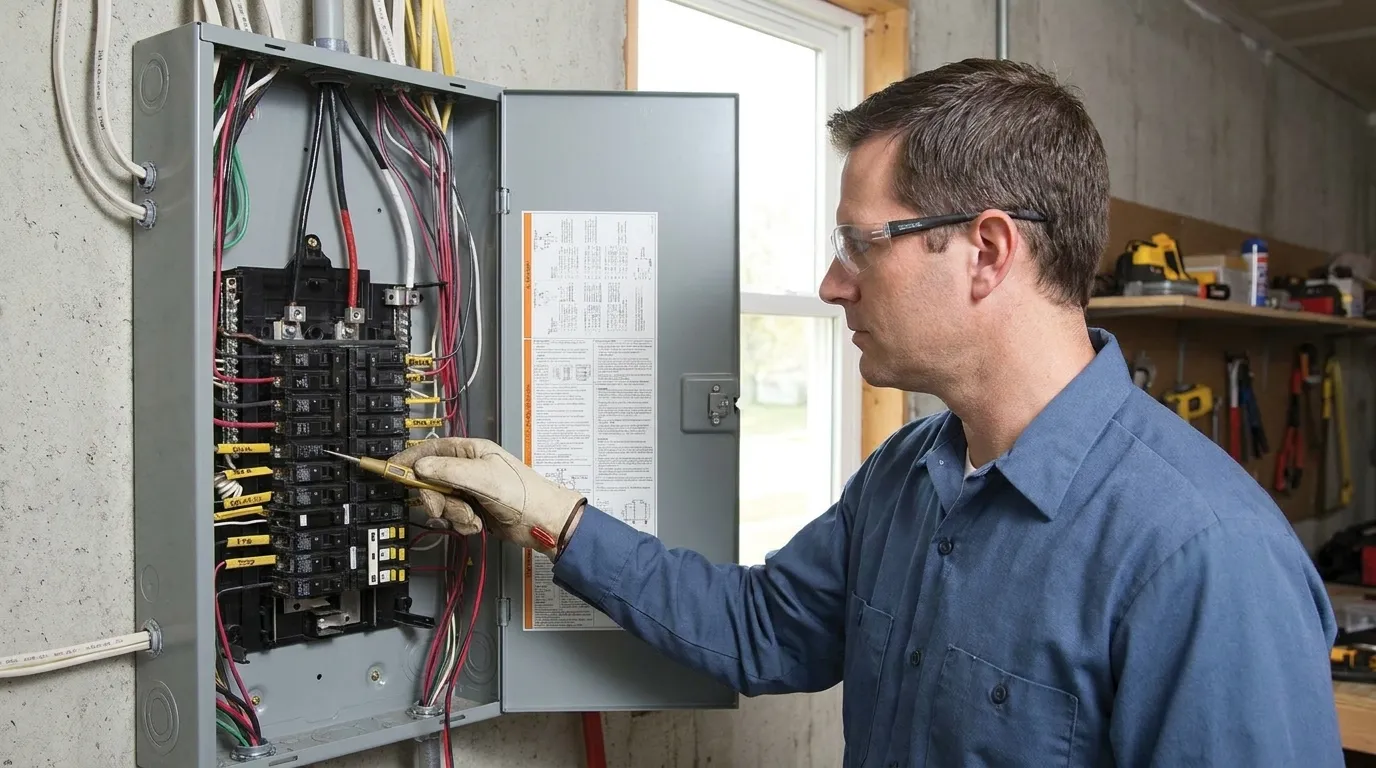
A home electrical upgrade can address the panel, service capacity, circuit distribution, or a specific load. Octopel works with 100A, 200A, 320A, and 400A service ratings. Start with what limits the project instead of assuming every home needs the same work.
Electrical Panel Upgrade / Replacement
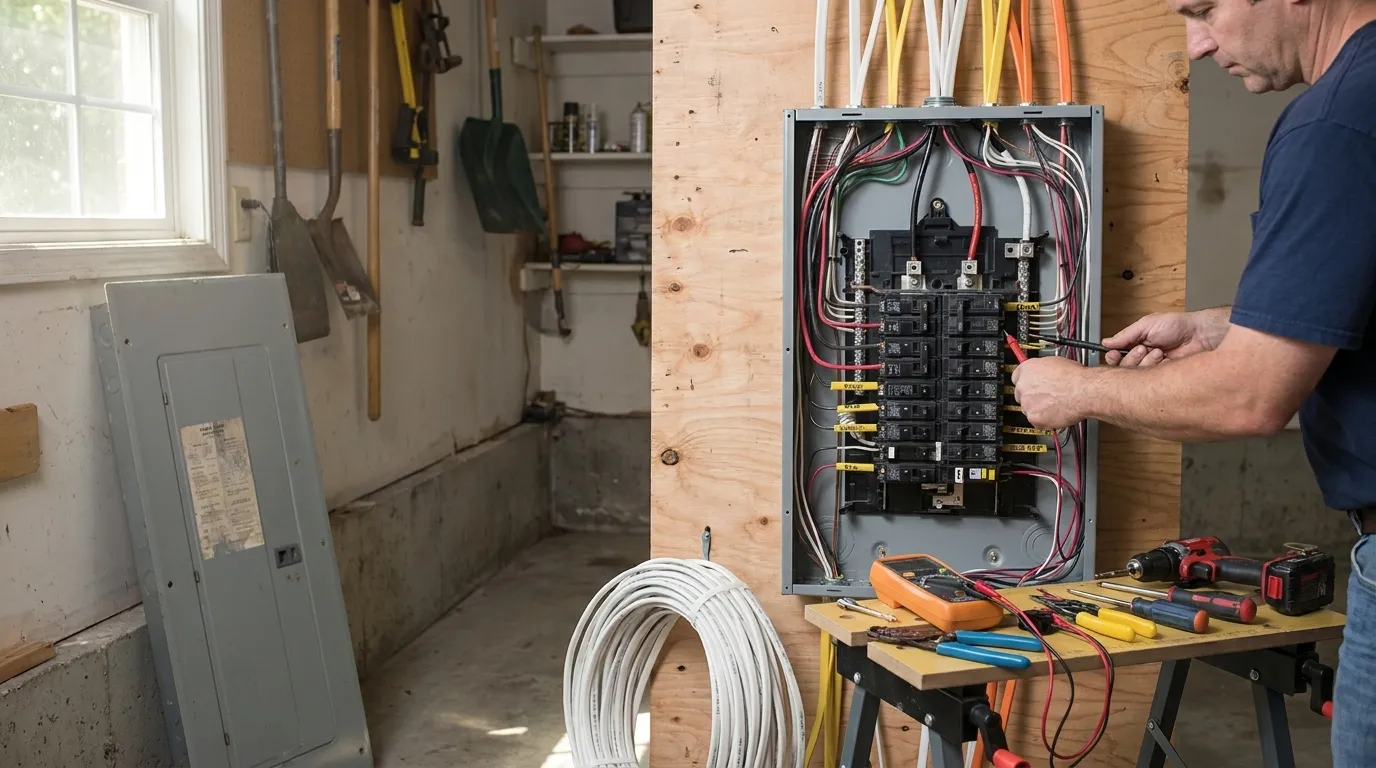
Review a damaged, unsuitable, or outdated main panel and determine whether panel-focused work fits the project. A panel replacement does not automatically increase service capacity.
Learn More →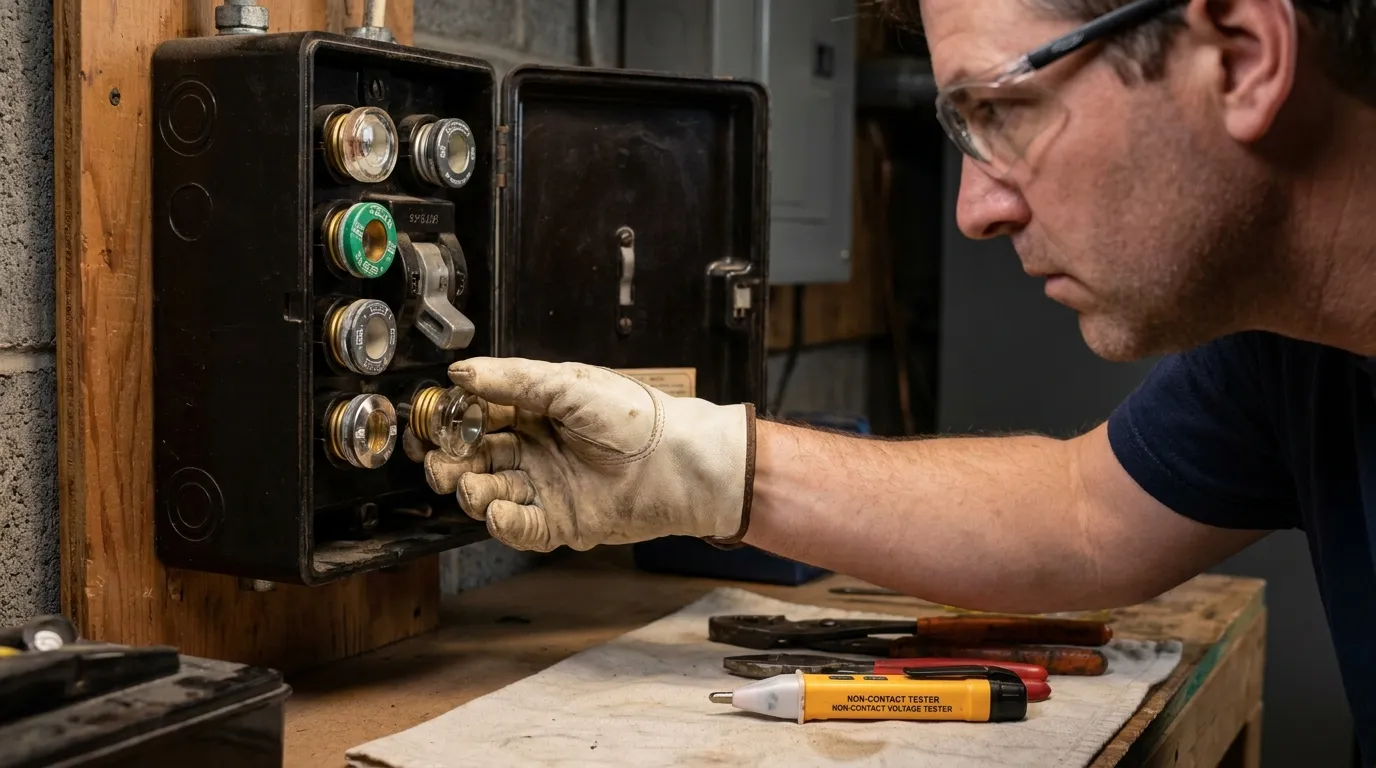
Fuse Box Replacement
Still have an old fuse box with screw-in fuses instead of breakers? See the dedicated page for insurance, wiring, and capacity specifics.
Learn More →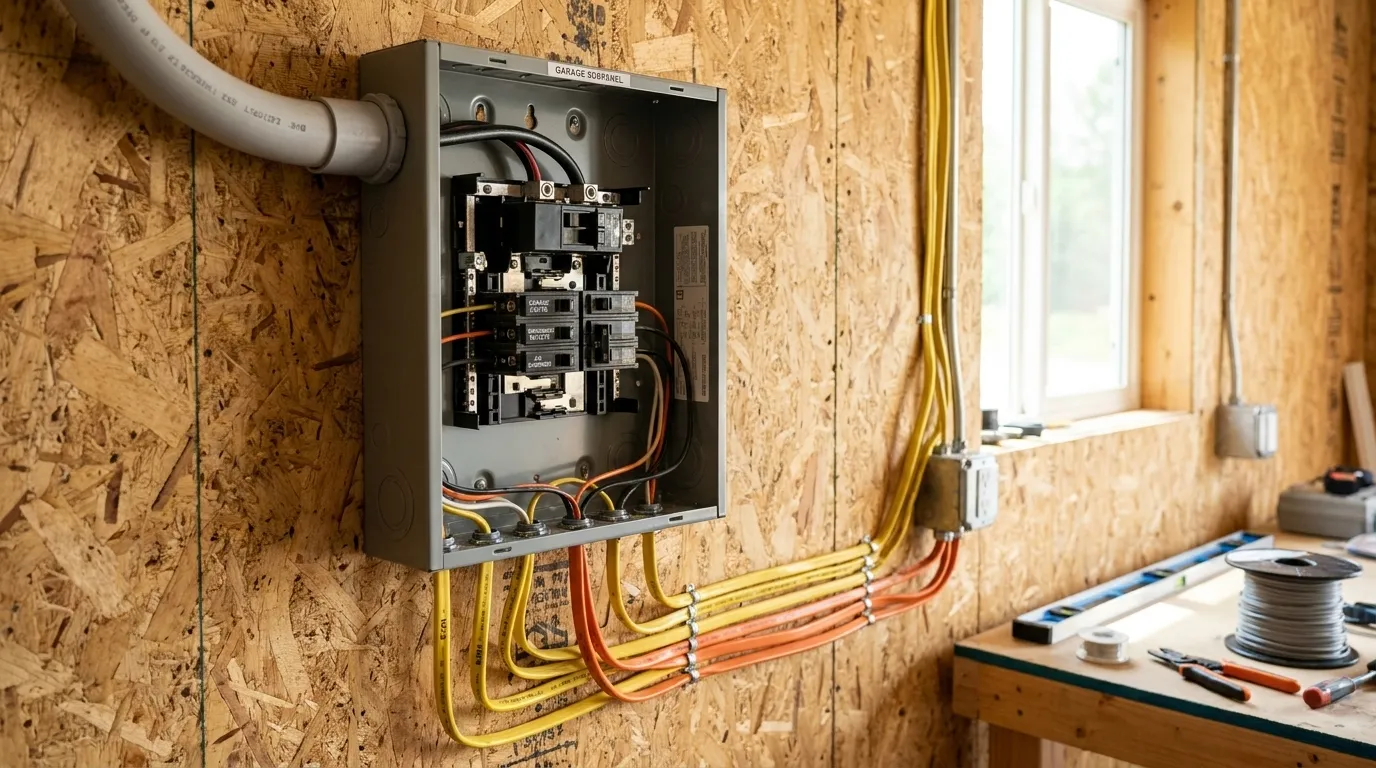
Subpanel Installation
A subpanel adds circuit distribution near a garage, addition, ADU, workshop, or equipment area. It does not increase the utility service capacity supplying the home.
Learn More →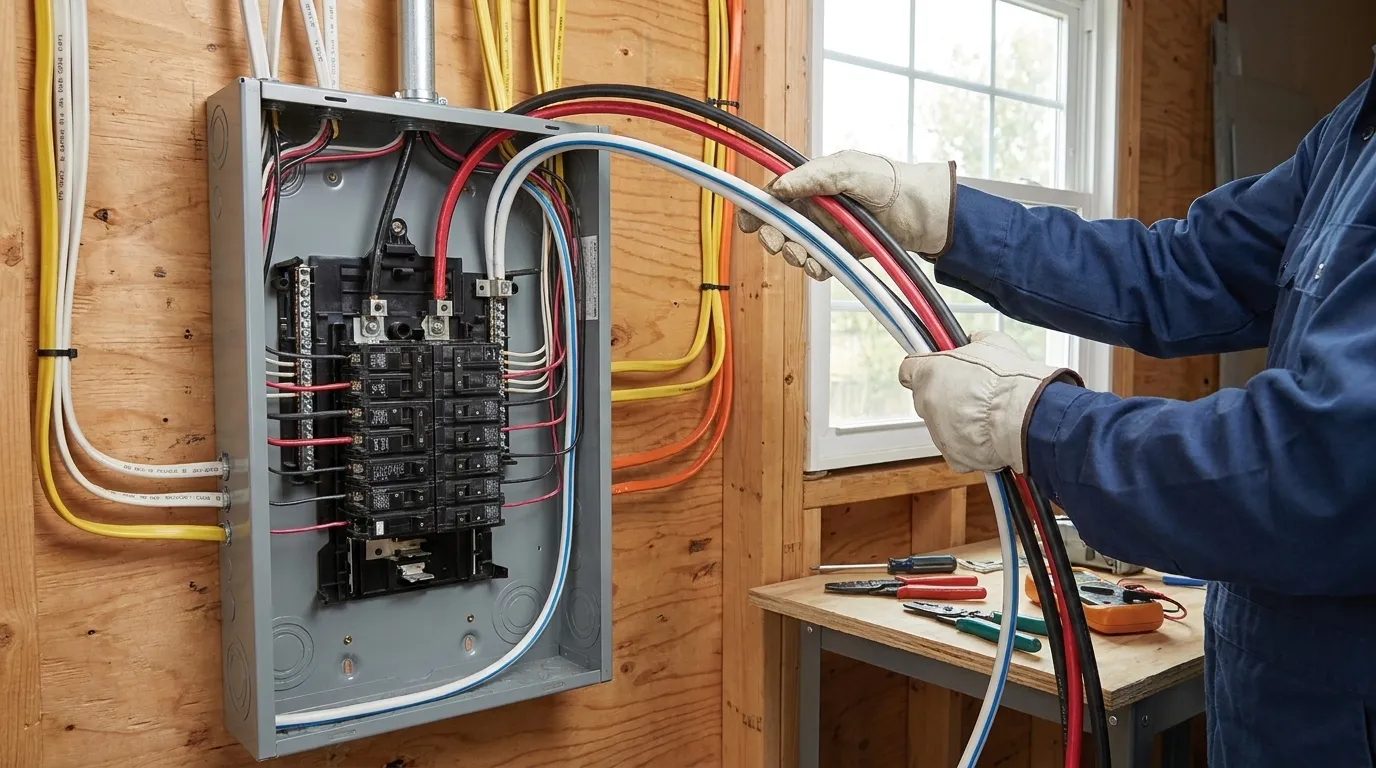
100A Service Upgrade
A 100A service upgrade can replace an outdated fuse box or lower-capacity system. It may fit smaller homes with modest loads, but it is not a universal recommendation.
Learn More →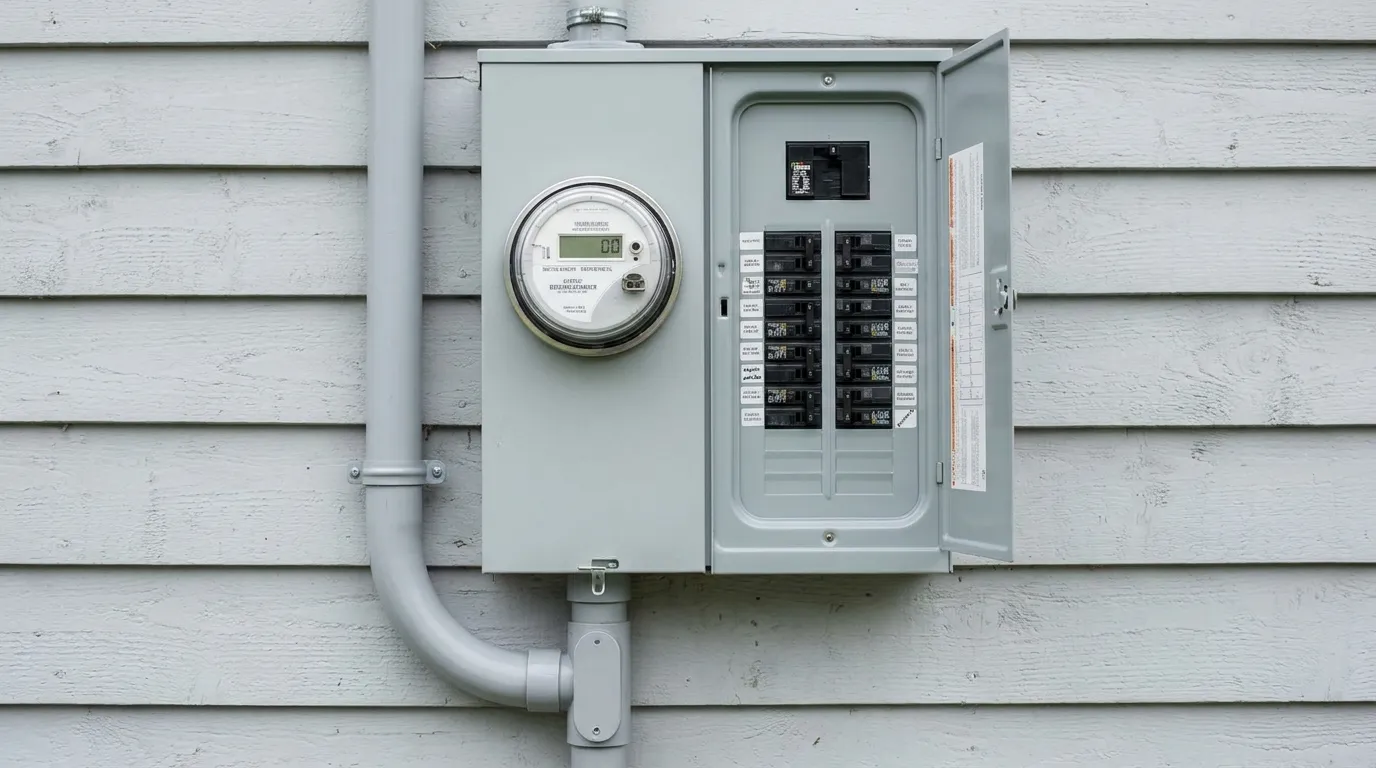
200A Service Upgrade
A 200A service upgrade is one possible path when existing capacity does not support the project. It is not a universal recommendation.
Learn More →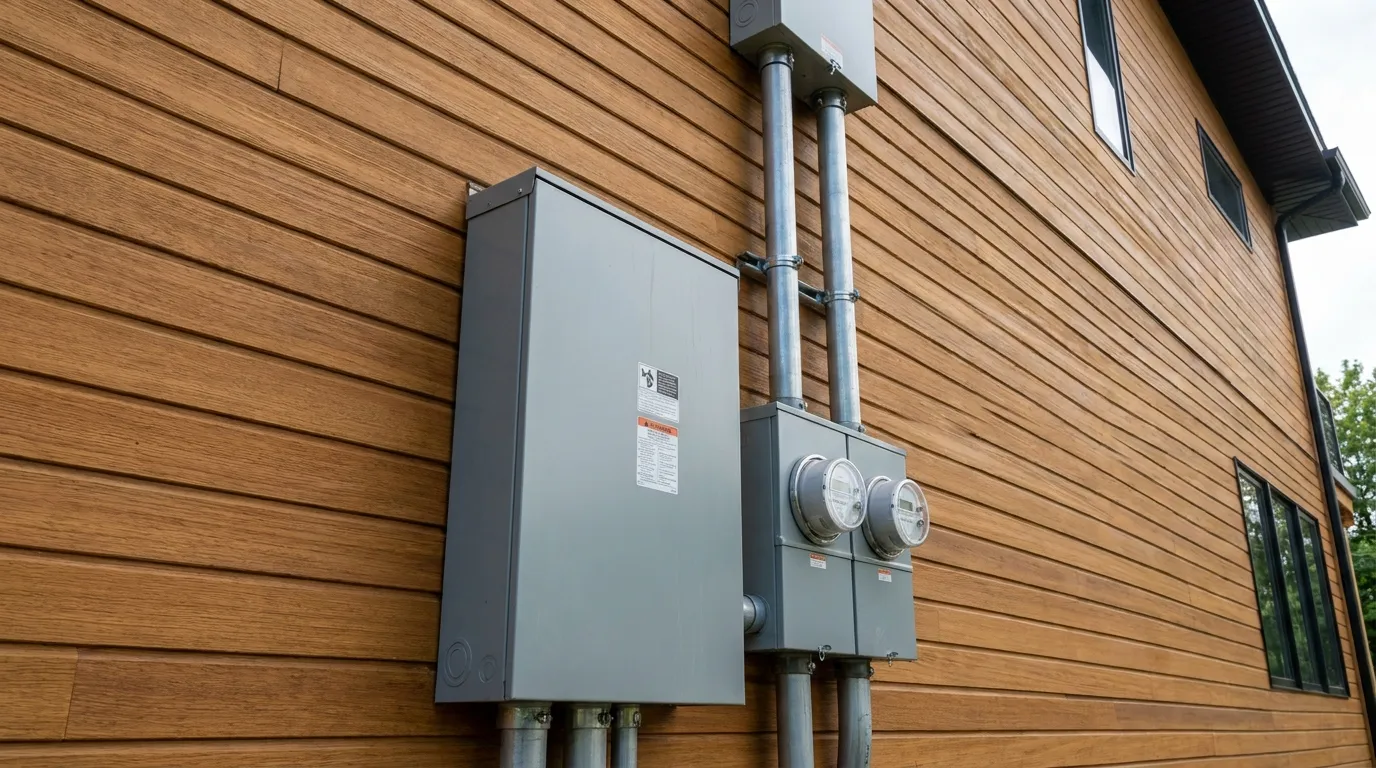
320A Service Upgrade
Higher-capacity service may suit projects with substantial current and future loads. The decision depends on project requirements, not house size alone.
Learn More →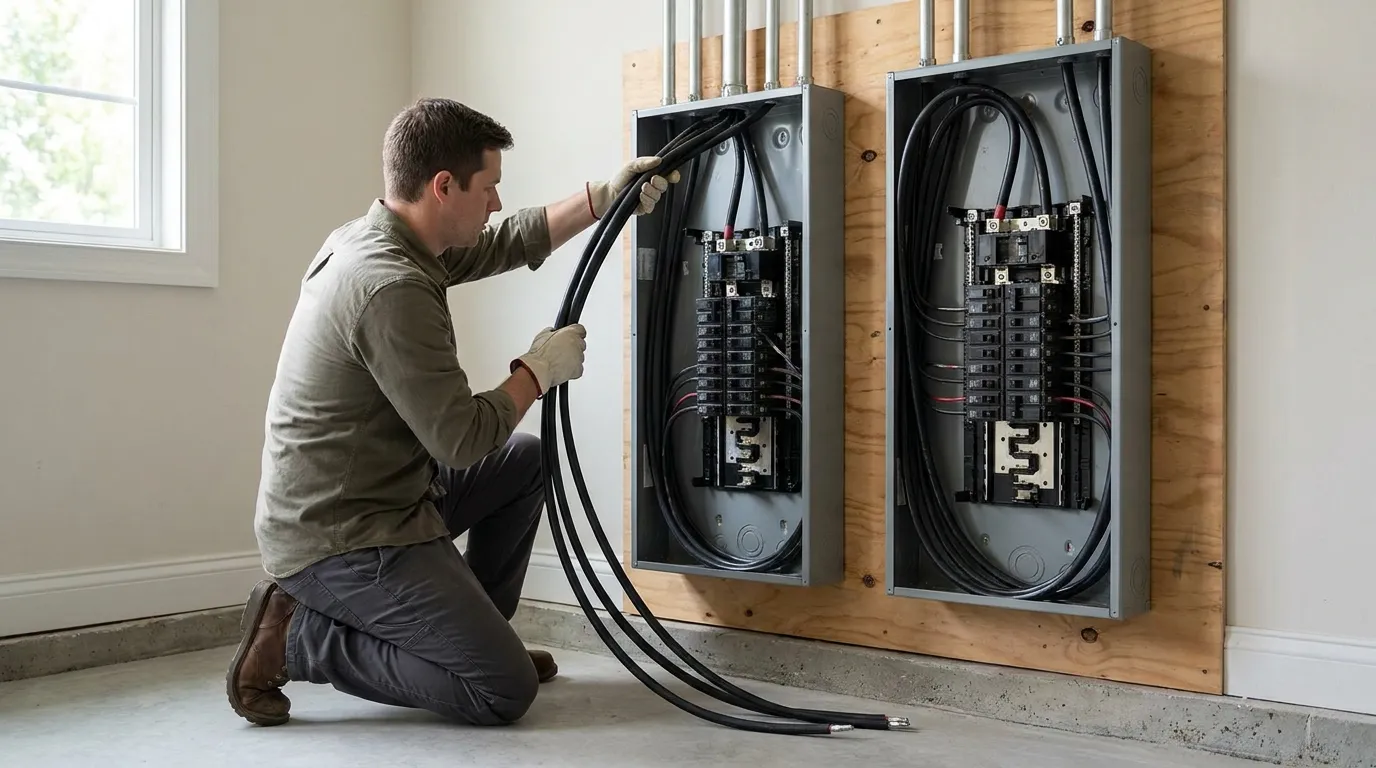
400A Service Upgrade
A 400A service upgrade is one path for large homes with heavy electrification, several EV chargers, or an ADU. The decision depends on project loads, not house size alone.
Learn More →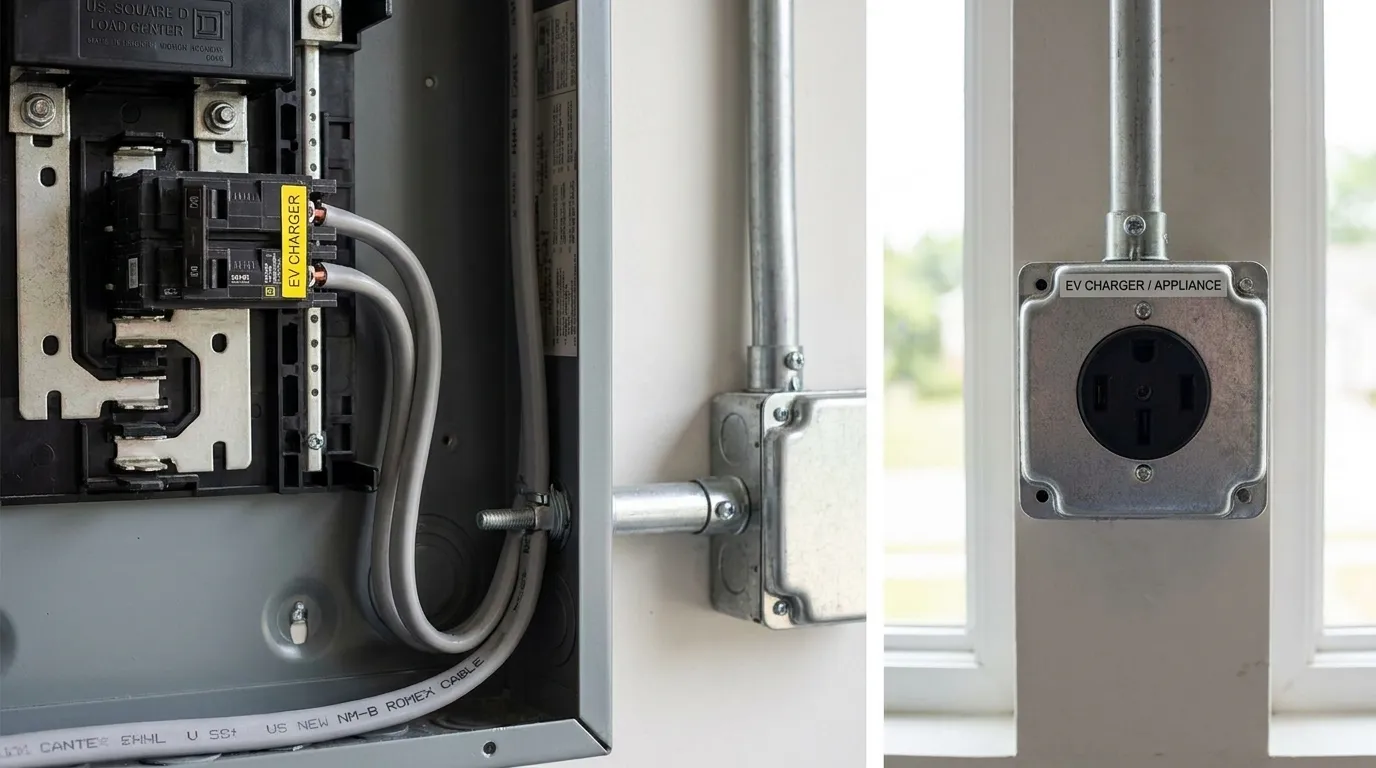
Dedicated Circuits for Home Equipment
EV chargers, heat pumps, spas, RV outlets, and appliances may need dedicated circuits. A full service upgrade is not always required.
Learn More →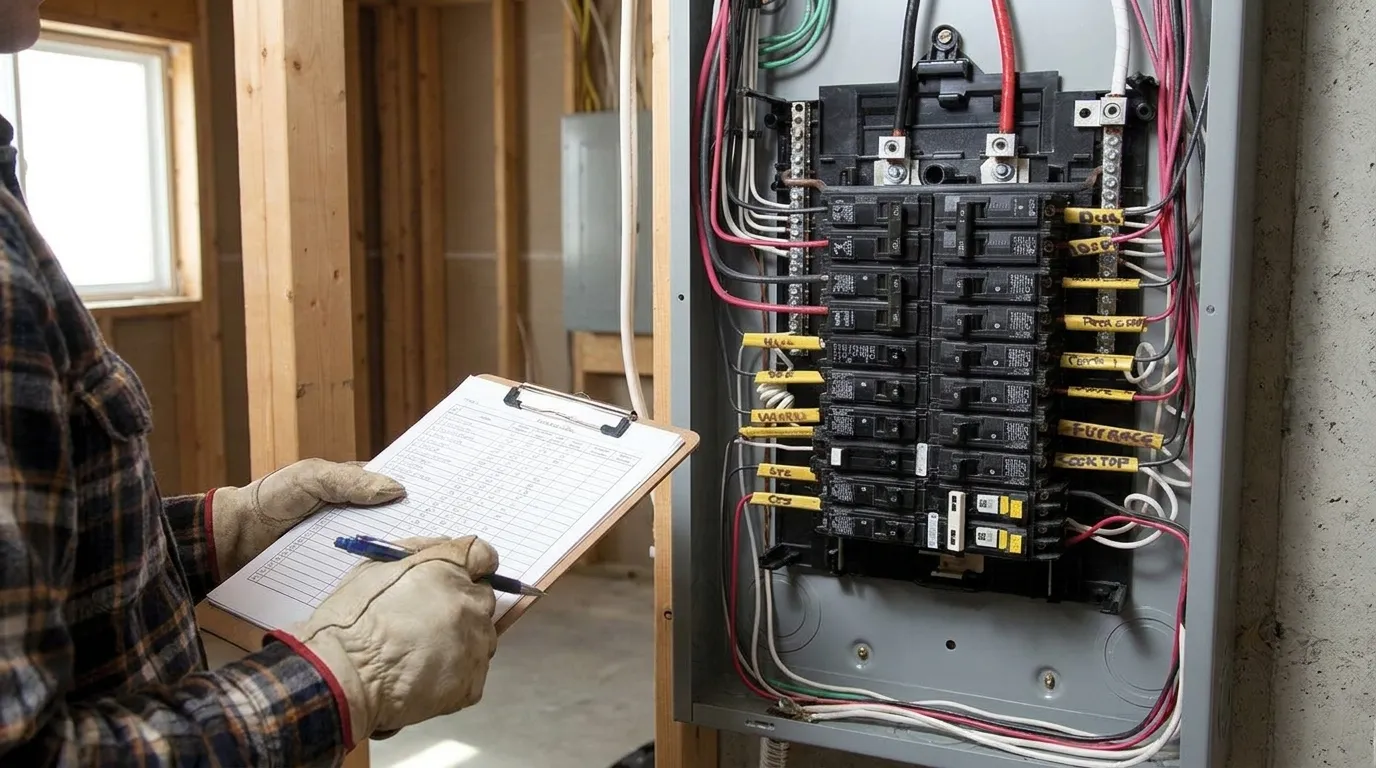
Load Calculation / Capacity Assessment
A capacity assessment reviews the existing service, current loads, and planned equipment before panel, circuit, subpanel, or service work is selected.
Learn More →Panel Upgrade or Service Upgrade? Start With the Difference
Panel condition and service capacity are related but separate. One concerns distribution equipment; the other concerns the capacity and infrastructure supplying it.
Panel Equipment, Service Capacity, and Circuit Distribution
Panel upgrade or replacement
Change distribution equipment
Panel, breakers, circuit organization
Electrical service upgrade
Increase or reconfigure incoming service
Service equipment, meter-related and panel coordination
Subpanel installation
Add distribution in another location
Feeder, subpanel, branch circuits
Capacity assessment
Check whether planned loads fit
Service rating, existing loads, planned equipment
Breaker Space Is Only One Part of the Capacity Question
Breaker space
Physical room for another breaker
Service rating
The service configuration supplying the home
Existing loads
Current electrical demand
Planned loads
Demand added by equipment or a remodel
Project requirements
Needed circuits, distribution, and coordination
Some projects involve both panel and service work. Others require only one path, a subpanel, or dedicated circuits.
An empty breaker slot does not prove the home has enough available capacity. A full panel does not, by itself, prove the incoming service is overloaded.
How Octopel Determines the Right Upgrade Path
The project starts with the existing system and planned loads. Scope depends on equipment condition, project requirements, and applicable utility, permit, or inspection steps.
- Share the Current Panel and Planned LoadsShare what you plan to add and what you know about the panel or service. Equipment details, remodel plans, inspection findings, and panel photos can clarify the starting point.
- Review the Existing SystemOctopel reviews the panel, service rating, current use, and planned loads. A load calculation or site assessment may be needed.
- Define the Upgrade PathThe project may need panel work, a service upgrade, a subpanel, dedicated circuits, or a combination. The path should not follow a standard amperage assumption.
- Identify Coordination RequirementsPermits, inspections, meter work, and utility involvement vary by project and jurisdiction. Responsibilities are clarified with the scope.
- Schedule the Agreed WorkOnce the scope is agreed, the work is scheduled with the homeowner. Inspection or utility steps follow the responsibilities set for the job.
What Are You Planning to Add or Change in Your Home?
Start with your project. An appliance, remodel, ADU, or panel concern can create different needs even when each appears to require “more power.”
The Existing Panel Is a Concern
Age alone does not determine whether a panel must be replaced. Condition, equipment type, circuit arrangement, and suitability for the planned work all matter.
The Existing Panel Is a Concern
Age alone does not determine whether a panel must be replaced. Condition, equipment type, circuit arrangement, and suitability for the planned work all matter.
A Practical Review of Equipment, Capacity, and Future Loads
The right home power upgrade depends on more than the panel label or open spaces. Scope should reflect the existing system and planned use. Work may include: panel and service assessment; load and capacity review; panel or service changes when appropriate; breaker and circuit organization; subpanel and feeder work; dedicated circuits; grounding and bonding within the project scope; labeling and project-specific closeout steps; permit, inspection, or utility coordination where required.
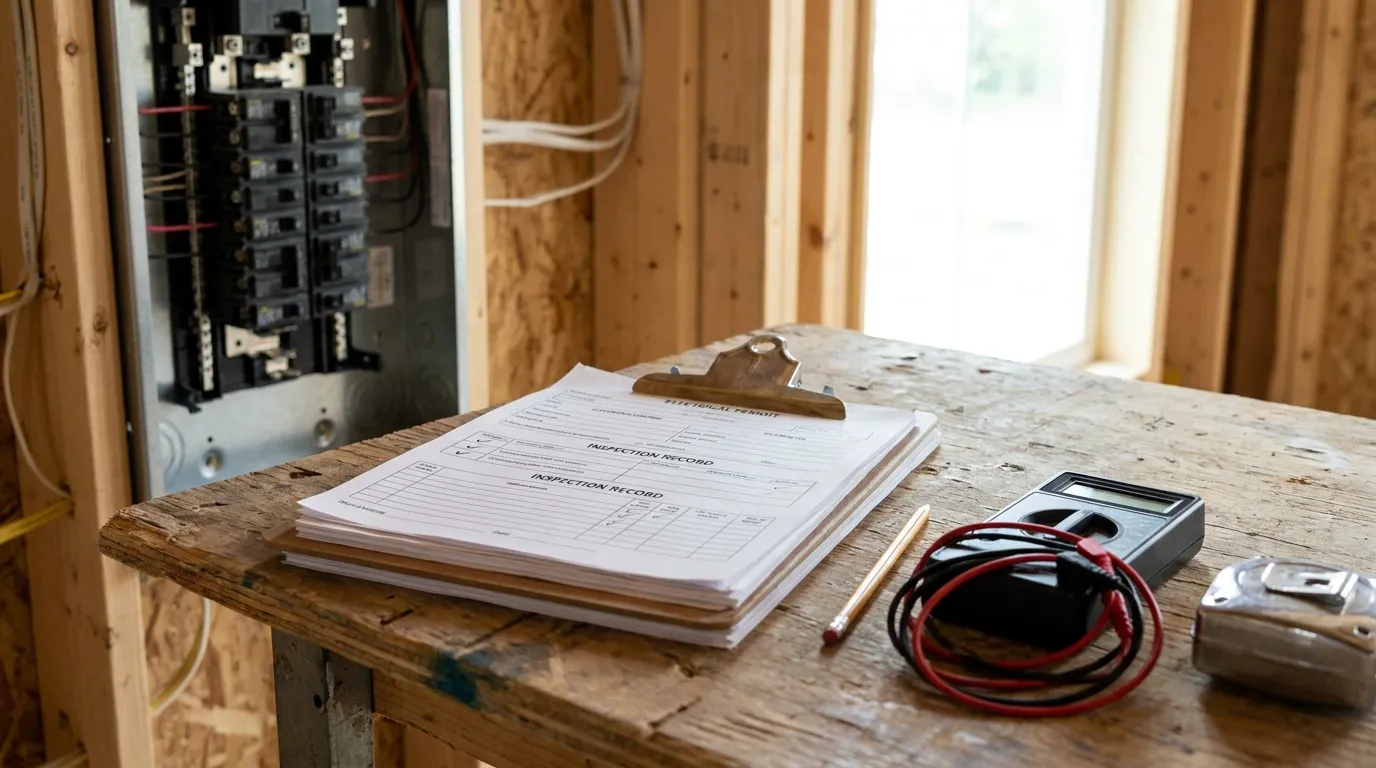
Existing Equipment and Panel Condition
Panel condition helps determine whether panel work belongs in the project. Open spaces do not replace a capacity review, and replacement may not increase capacity.
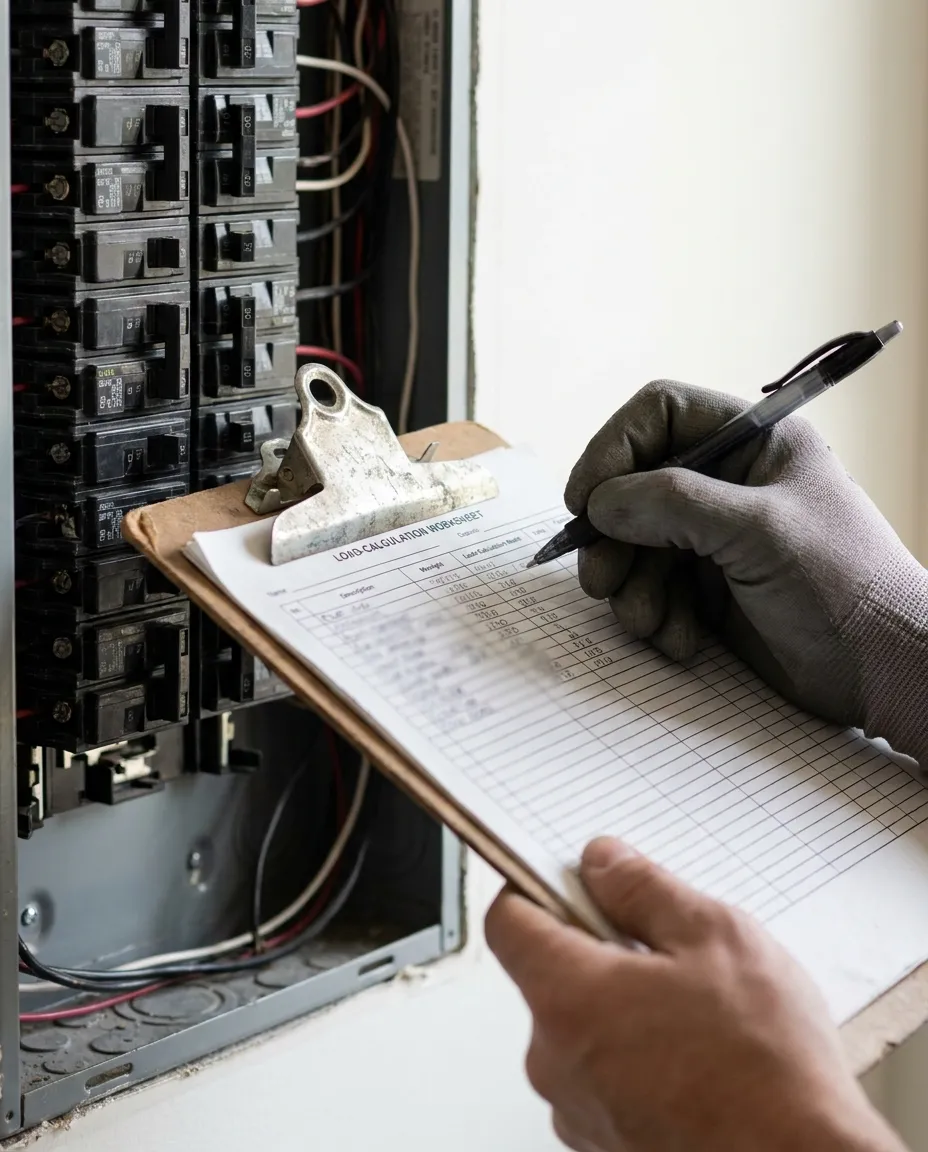
Current and Planned Electrical Loads
Current use and future equipment plans define the capacity question. Reviewing them together helps avoid an undersized or unnecessarily broad solution.
1,000+ Residential Repairs
Electrical troubleshooting and repairs completed in occupied homes.
Washington Electrical Contractor
Washington electrical contractor registration OCTOPEL770O1.
Project-Specific Coordination
Service equipment, meter arrangements, permits, inspections, and utility responsibilities vary by property and jurisdiction.
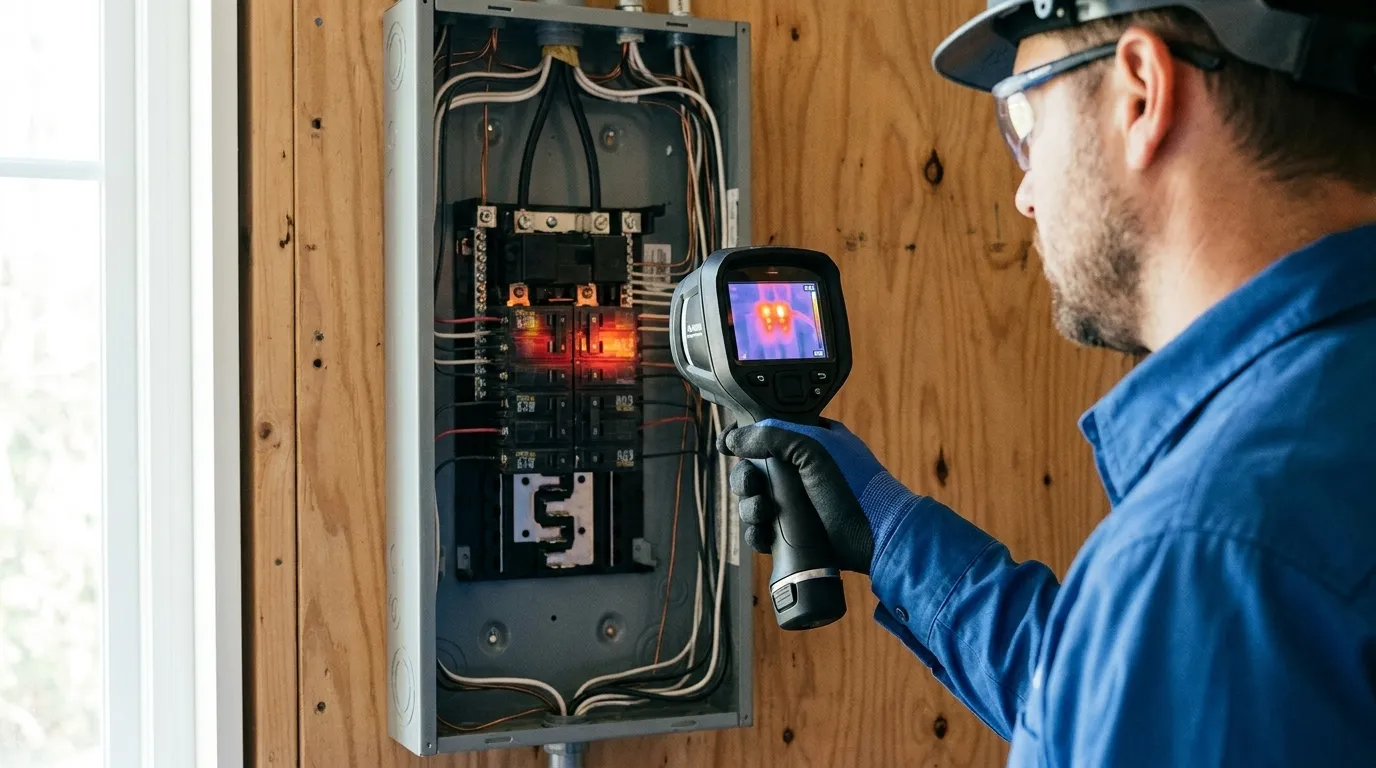
What Affects the Scope and Cost of a Home Power Upgrade?
There is no single price for every project. Scope depends on the existing system, new equipment, access, routing, and external requirements.
Existing Panel and Service Configuration
Panel-only work differs from changing incoming service. Equipment condition, service rating, meter arrangement, grounding, bonding, and circuits affect scope.
New and Future Electrical Loads
An EV charger, heat pump, range, hot tub, water heater, ADU, workshop, or remodel can change requirements. Planned loads should be considered together.
Access, Routing, and Related Electrical Work
Feeder routes, circuit length, access, equipment location, surrounding surfaces, and project phasing affect labor and materials.
Utility, Permit, and Inspection Requirements
Some projects require utility coordination, permits, inspections, meter work, or planned interruption. Responsibilities depend on the project and jurisdiction.
Customer Reviews
Verified feedback from residential electrical upgrade customers across the region.
Gio Hwang
Residential customer
Octopel installed a new power pole and 200-amp electrical service for my manufactured home. The Octopel team was professional, communicated clearly, and completed the work efficiently. Everything has been working well,Read full review →
David
Residential customer
I recently had Octopel install a new breaker panel in my aging home. I was completely impressed by this company's ability to handle everything from the permits to the one-on-one on what to expect during the work phase.Read full review →
Jan Kubista
Residential customer
Needed a complete rewiring of my outdated electrical panel. Octopel was fantastic! They walked me through the entire process beforehand and provided a clear quote. The electrician was courteous, knowledgeable, and keptRead full review →
Stephanie Kim
Residential customer
I'm delighted to share my positive experience with Octopel. They expertly rectified the mistakes left by a previous contractor, showcasing exceptional skill and attention to detail. The installation of a new panel wasRead full review →
Plan the Right Electrical Upgrade for Your Home
Tell us what you plan to add, your panel or service rating if known, and any electrical concerns. Submit your request and a manager will call to clarify the details. During business hours, we respond within one hour. Any site visit is scheduled with you based on the situation, location, and team availability.
Panel and Home Power Upgrades Across Western Washington State
Octopel provides planned residential electrical work across King, Snohomish, Kitsap, Pierce, Thurston, Clallam, Grays Harbor, Jefferson, and Mason counties, including Seattle, Tacoma, Bellevue, Everett, Redmond, Renton, Kirkland, Bothell, Kent, and Auburn.
Availability and possible visit timing depend on the property location, reported problem, and team schedule.
Not sure whether your home is within the service area?
Panel and Home Power Upgrade FAQ
Direct answers to common questions about panel replacement, service capacity and home power upgrades.
An electrical panel upgrade changes or replaces equipment that distributes power to branch circuits. It does not automatically increase incoming service capacity.
An electrical service upgrade changes or reconfigures the capacity or infrastructure supplying the home. It differs from panel replacement at the same capacity.
Not necessarily. A panel replacement can update distribution equipment while the service rating remains unchanged. Increasing capacity may require separate service work.
Review panel condition, current service, existing loads, planned equipment, and future plans. The solution may be panel, service, subpanel, or circuit work.
No. An empty slot shows physical room for a breaker, not available capacity. Service rating, existing loads, equipment requirements, and circuit design also matter.
Not automatically. Some homes can support the load with existing service and a dedicated circuit. Others may need panel, distribution, or service changes.
Octopel works with 100A, 200A, 320A, and 400A service ratings. The right rating depends on existing loads, planned equipment, and project requirements, so a capacity review is a sensible first step.
No. A subpanel adds circuit distribution through a feeder from the existing system. It does not, by itself, increase utility service capacity.
A load calculation can show whether planned loads may fit the existing service when based on accurate information and project assumptions. It helps select the next path.
Cost depends on whether the work is panel-only or service-related, existing equipment, new loads, routing, grounding and bonding, access, and project-specific utility, permit, and inspection requirements.
Not quite. A fuse box uses screw-in or cartridge fuses instead of circuit breakers and is usually paired with a service upgrade when replaced. See Fuse Box Replacement for details specific to a fuse-based system.