
Commercial EV Charging Solutions
Commercial EV charging stations should be planned around who will use them, vehicle dwell time, required charging capacity, and existing electrical infrastructure. Octopel supports commercial EV charger installation by assessing site capacity, designing electrical distribution, and coordinating charger equipment deployment. Not every property needs the same charging architecture, so we evaluate your parking layout and operational goals to phase or scale the project accordingly.
- Employees need reliable workplace charging access over long dwell times.
- A commercial property wants to add tenant or customer charging amenities.
- A fleet is beginning electrification and needs dedicated overnight charging.
- A multifamily property needs shared EV charging with strict load management.
- Multiple chargers must be installed at one location with uncertain electrical capacity.
- A property wants to install infrastructure now and expand charger counts later.
- A charger vendor needs an electrical contractor for site deployment.
Your final price is calculated by a manager and depends on:
- Hours of labor required
- Distance to the job site
- Electrician skill level required
- Number of electricians needed
- Urgency of the request
Additional factors that can affect price: materials, service fees, utility company disconnect/reconnect charges, and permits.
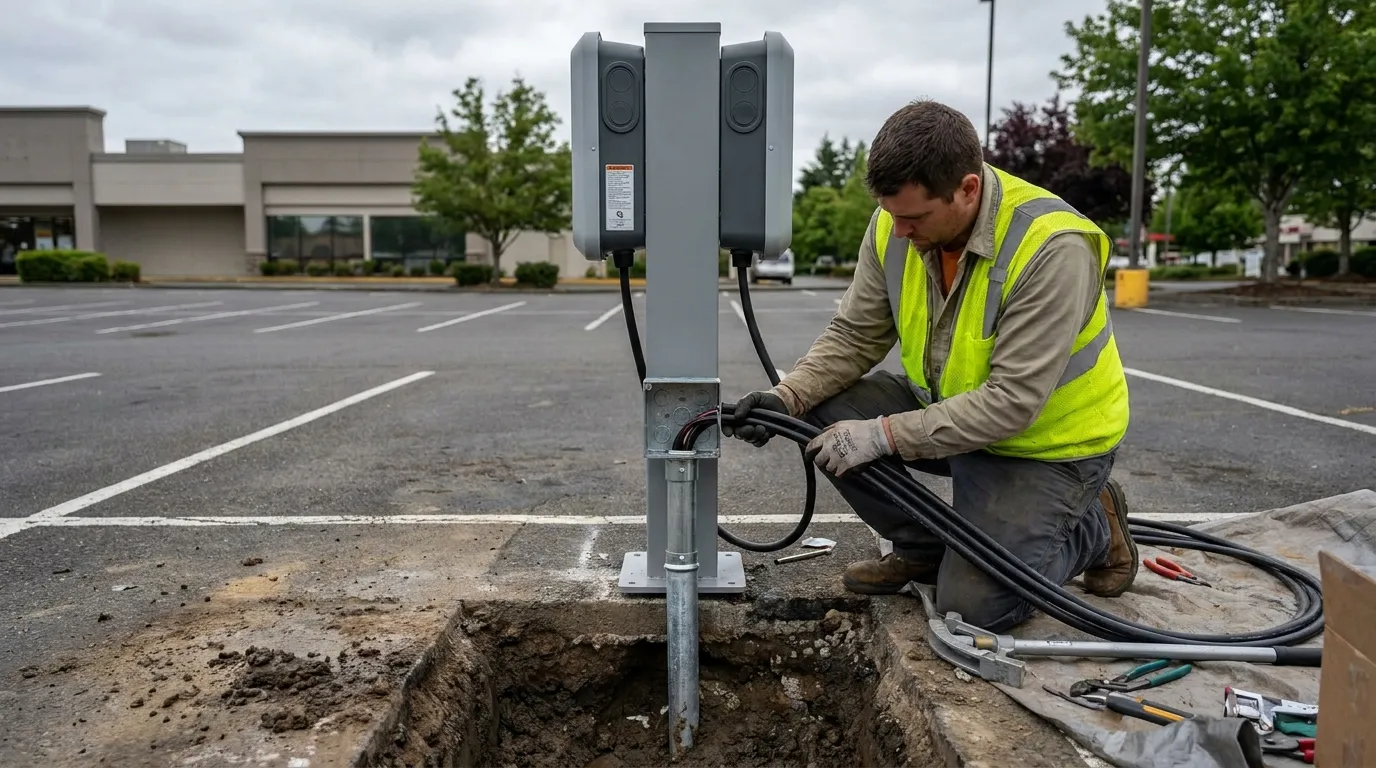
What Type of Commercial EV Charging Project Are You Planning?
The right commercial charging design depends on who uses the chargers, how long vehicles remain parked, site capacity, and whether charging is an amenity or an operational requirement.
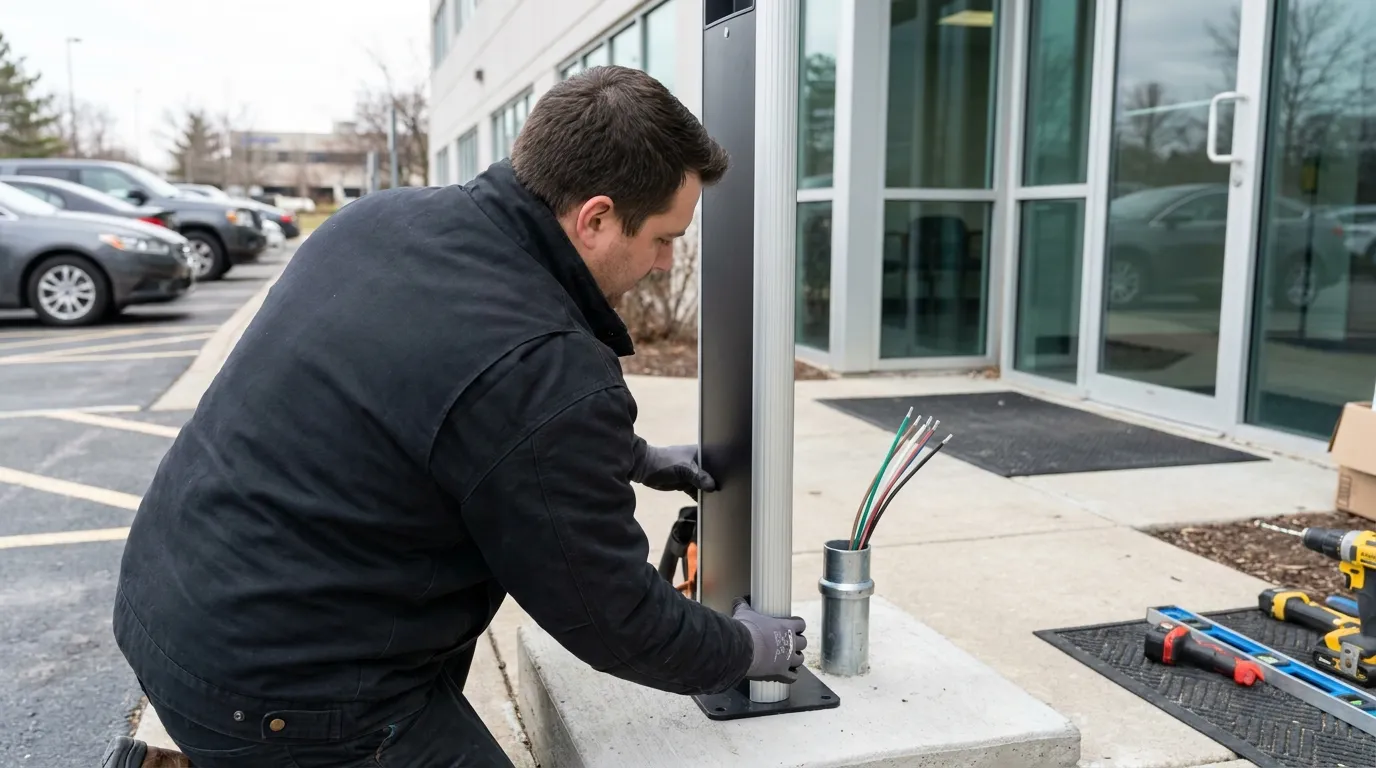
Workplace EV Charging
Workplace EV charging installation focuses on employee dwell times, shared charging access, and balancing multiple vehicles over a standard shift to support future adoption.
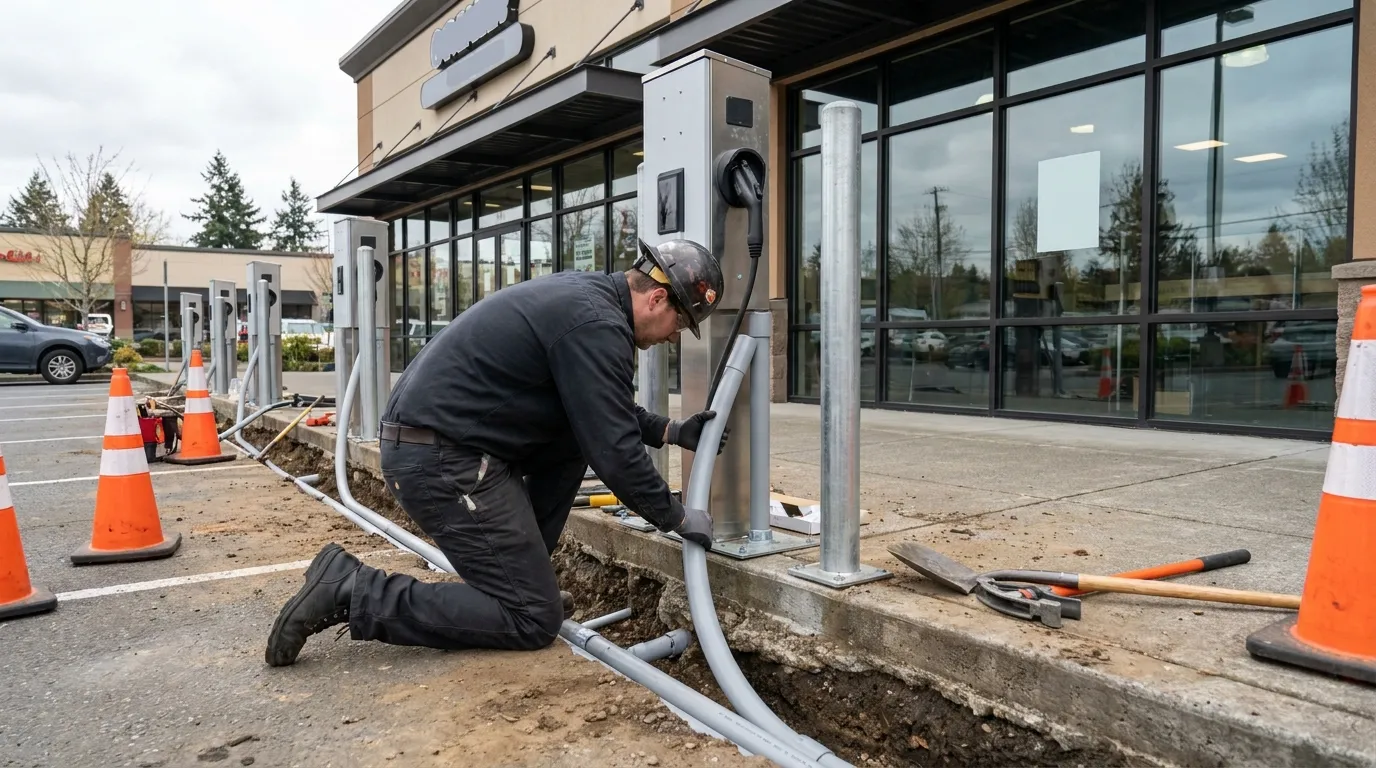
Commercial Property & Customer Charging
For retail and office locations, charging accommodates tenants, visitors, and customers, often requiring specific access models and optimized parking layouts.
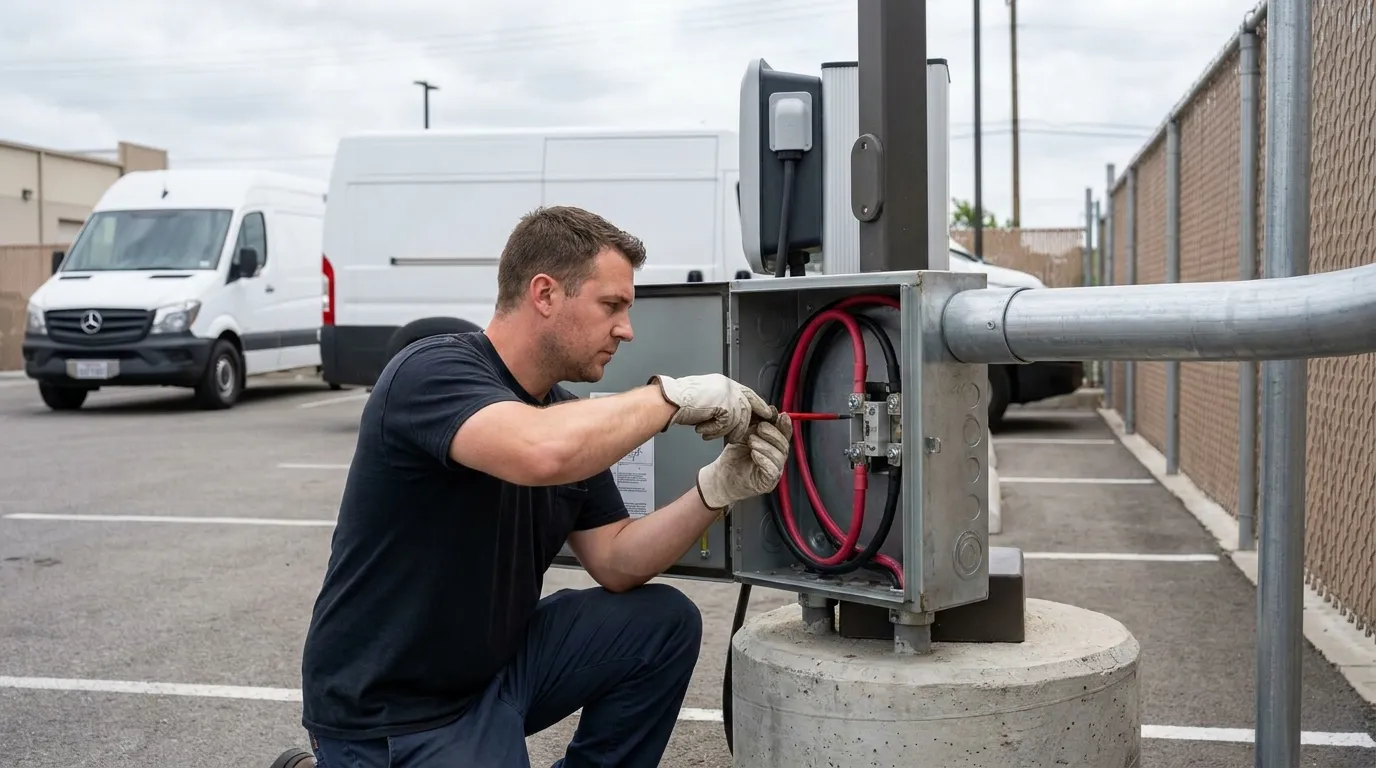
Fleet Charging
Designed around specific vehicle types, duty cycles, and operational schedules, fleet charging prioritizes overnight or opportunity charging to meet daily energy demands.
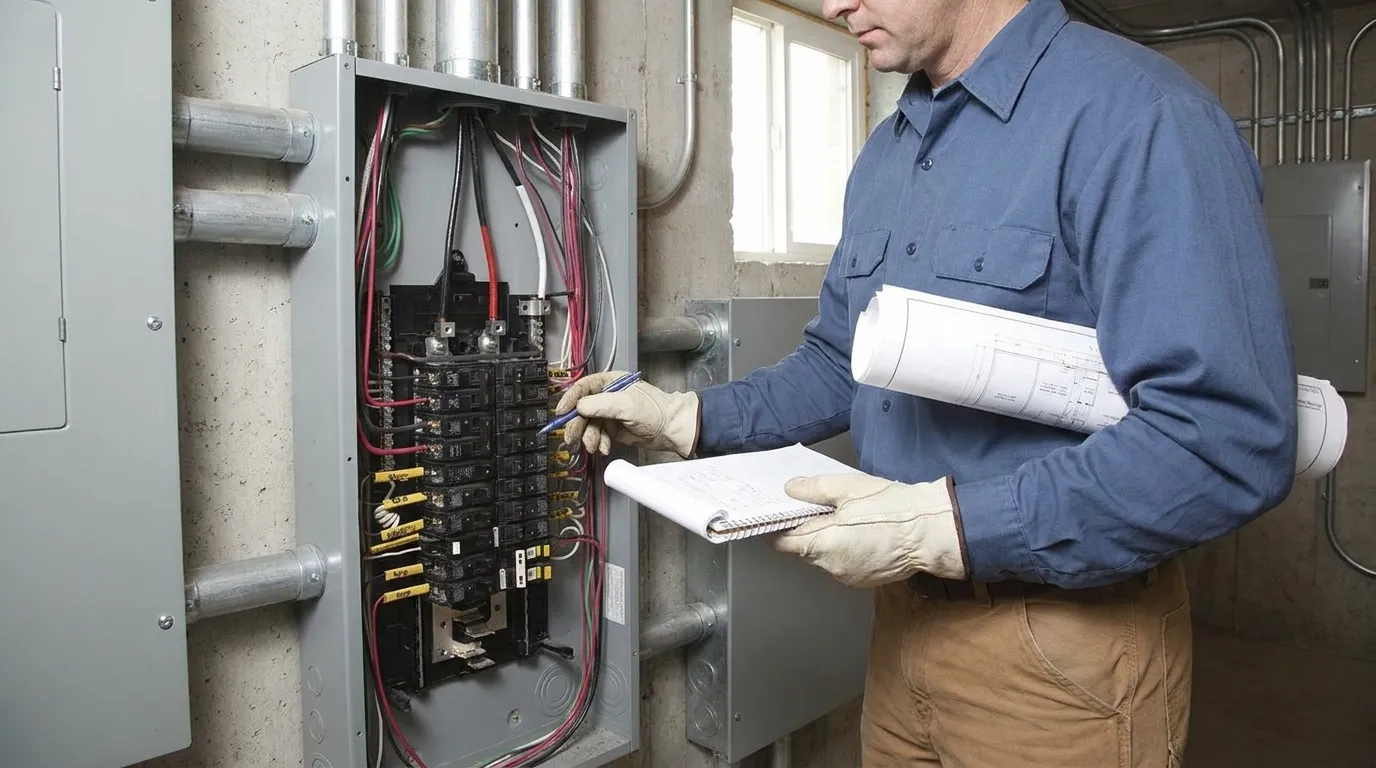
Multifamily & Shared Charging
Shared residential charging often requires management-controlled allocation, load management strategies, and clear parking assignments across multiple users.
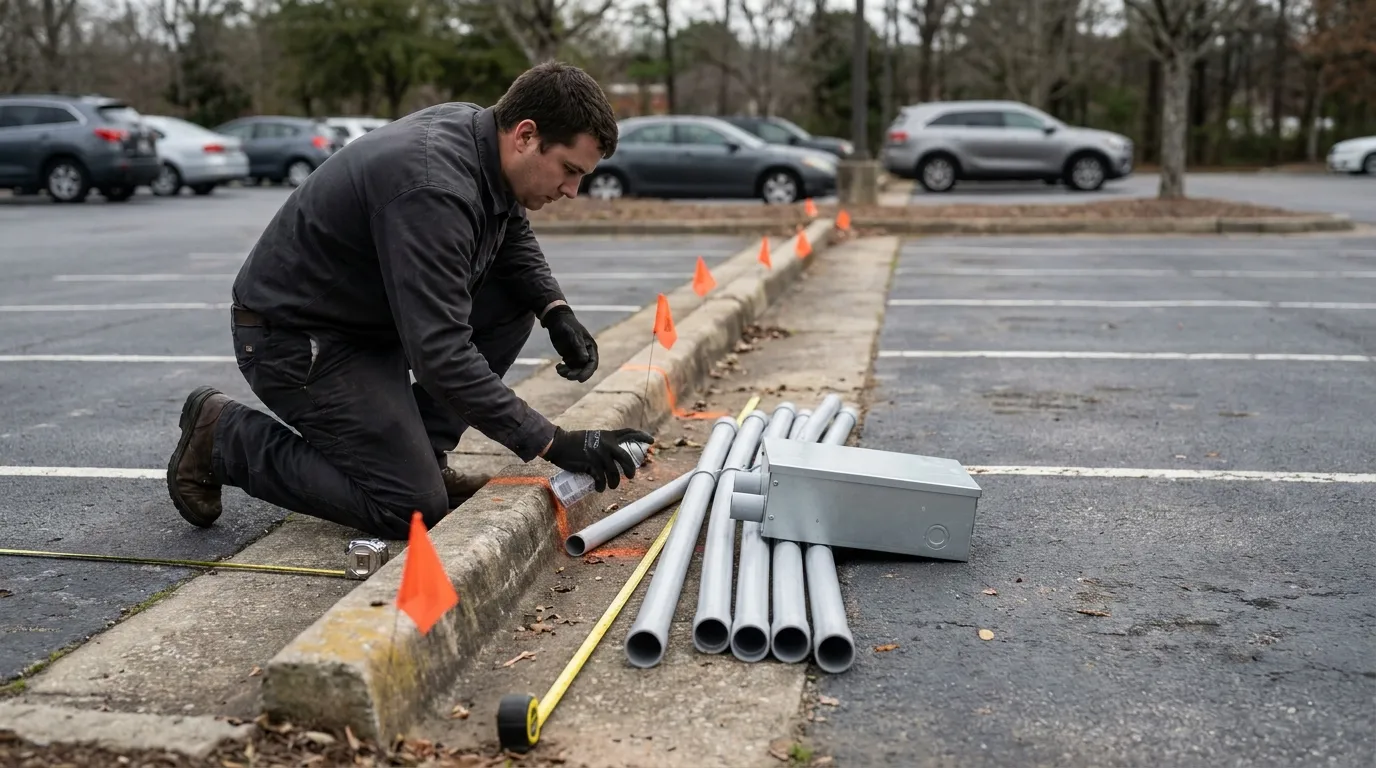
Future-Ready EV Infrastructure
Install electrical distribution, feeders, and conduit for planned capacity now, allowing phased charger deployment as demand and EV adoption grow.
What Parts of a Commercial EV Charging Project Are Separate?
A commercial charging project involves multiple scopes. Electrical infrastructure, charger hardware, networking, and ongoing operations should be clearly assigned before construction.
Electrical & Physical Infrastructure
Electrical distribution
Service, distribution panels, feeders, and circuits.
Civil & parking work
Trenching, concrete, striping, bollards, and signage.
Equipment mounting
Pedestal or wall-mounted EVSE physical installation.
Hardware, Software & Operations
Charger hardware
The physical EVSE units and load management controllers.
Network & software
Access control, monitoring, billing, or payment features.
Operations & maintenance
Ongoing charger support, manufacturer service coordination, and equipment upkeep.
Hardware, electrical installation, networking, and charging operations may be separate scopes.
Incentive eligibility must be verified for the actual project at the time of application.
How a Commercial EV Charging Station Installation Project Works
We structure commercial EV charger installations to align with your operational needs, existing electrical capacity, and project stakeholders.
- Define Users and Project GoalsDetermine who will use the chargers, vehicle types, expected parking duration, and initial versus future charging demand.
- Review Site and Electrical CapacityAssess the existing service, distribution equipment, panel capacity, physical breaker space, and potential feeder routes.
- Select Architecture and ResponsibilitiesFinalize the charging hardware approach, define load management strategies, and clarify electrical versus software scopes.
- Coordinate Construction and PermitsManage equipment procurement, utility coordination where needed, permit acquisition, and parking lot civil work planning.
- Install and Complete InfrastructureExecute the electrical deployment, connect the EVSE hardware, test the physical infrastructure, and coordinate final inspections.
Planning Your EV Charging Infrastructure
Select the situation that most closely matches your current project stage to see how we address electrical capacity, load, and expansion.
Determining how many chargers to install
Charger quantity should be based on current EV users, expected adoption, parking duration, daily charging demand, and available budget rather than a fixed ratio.
Determining how many chargers to install
Charger quantity should be based on current EV users, expected adoption, parking duration, daily charging demand, and available budget rather than a fixed ratio.
Why Hire an EV Charging Station Contractor for a Commercial Project?
Octopel brings over 10 years of experience to commercial electrical infrastructure, ensuring multi-charger projects, capacity planning, and utility coordination are handled correctly and efficiently.
Comprehensive Capacity Planning
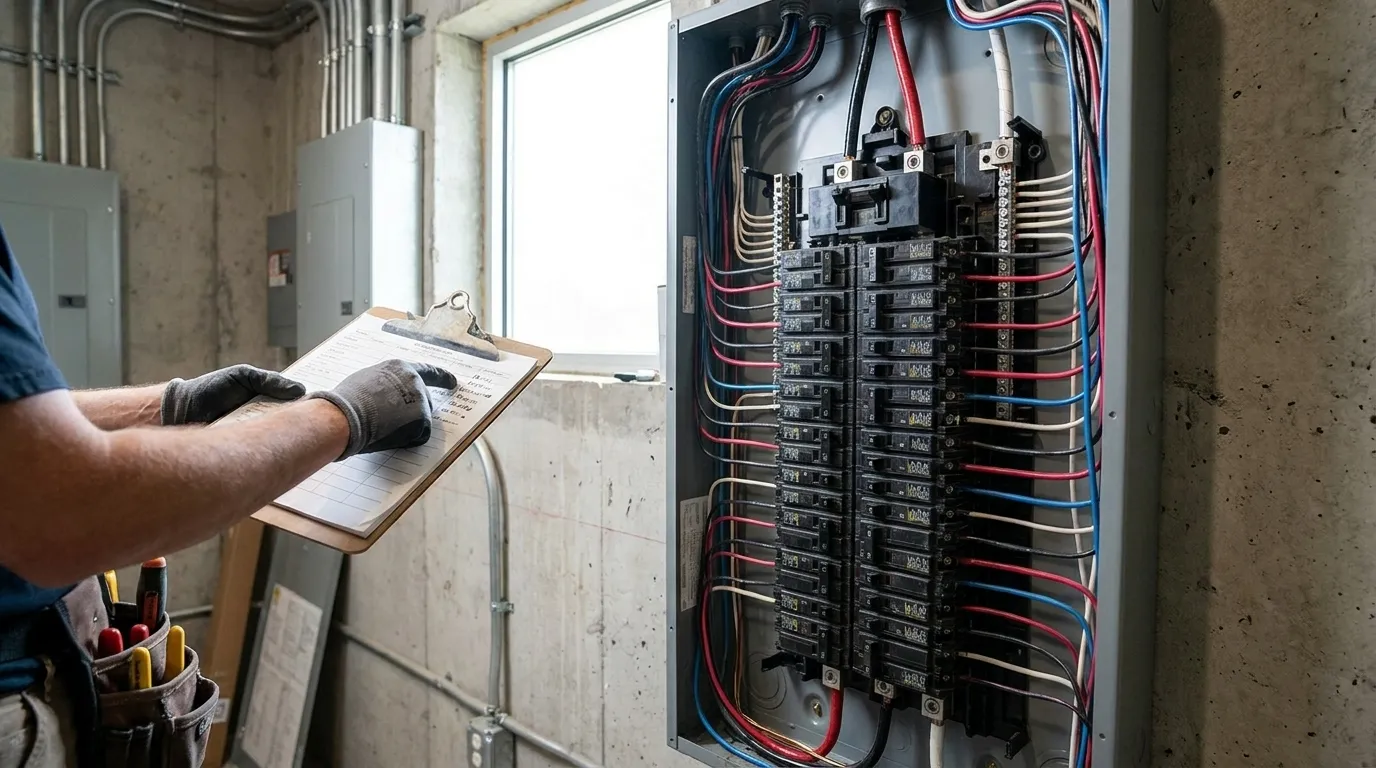
We assess main distribution, panel capacity, existing commercial loads, and simultaneous charging requirements before finalizing the electrical design.
Project and Trade Coordination
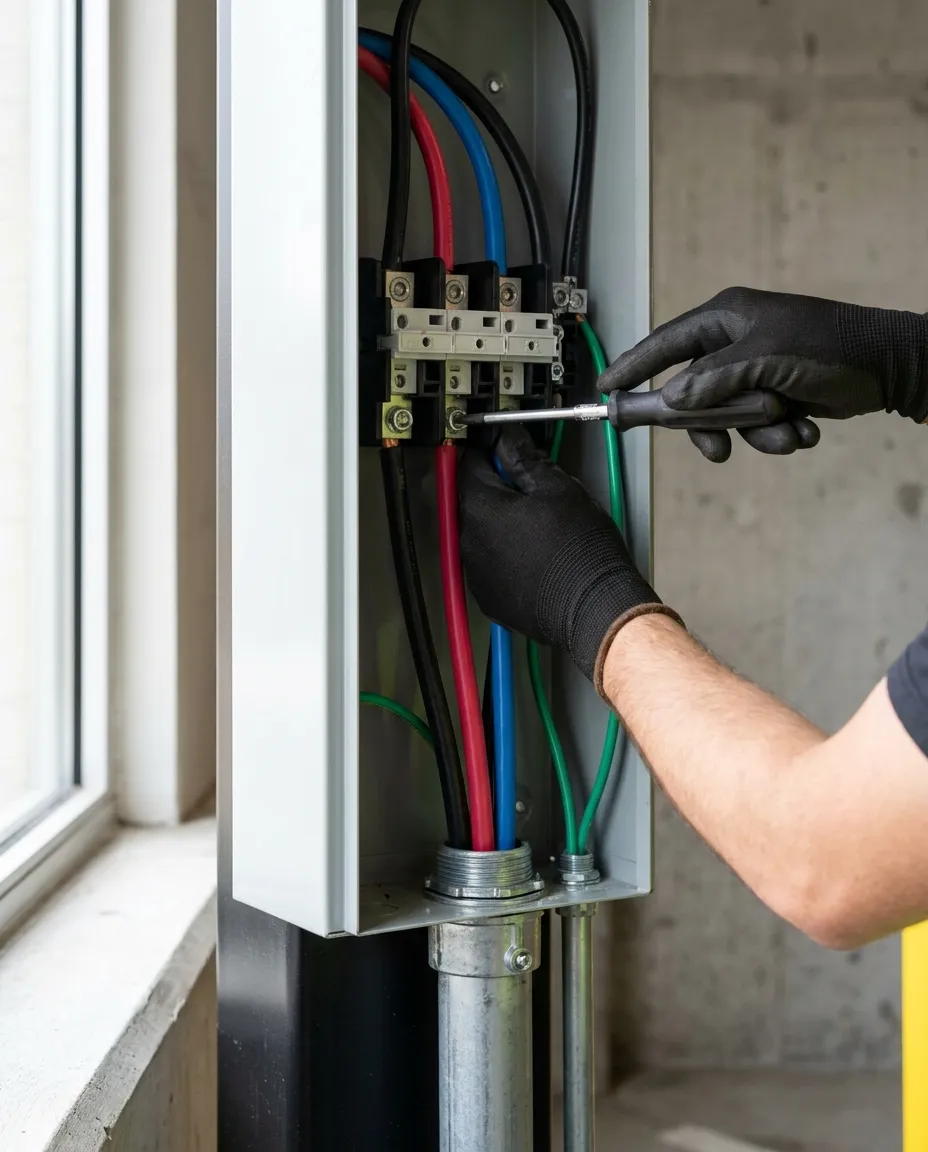
With over 100 commercial projects completed, we coordinate closely with property managers, utilities, civil contractors, and network providers to align project phases.
100+ Commercial Projects
Electrical work for commercial properties, facilities, and construction projects.
Washington Electrical Contractor
Washington electrical contractor registration OCTOPEL770O1.
Transparent Scope Definition
We clearly divide the electrical installation scope from network setup and payment processing, ensuring all responsibilities are properly assigned before construction begins.
How Much Does Commercial EV Charging Station Installation Cost?
Commercial EV charging cost depends on charger quantity, electrical capacity, civil work, hardware, and future-expansion requirements.
Charger Quantity and Output
The number of ports and the power output of each charger dictate the required electrical capacity, feeder sizing, and overall equipment costs.
Electrical Infrastructure Upgrades
Costs vary based on available panel and service capacity, potential switchboard or transformer implications, and distance for new feeder routes.
Site and Civil Work
Trenching, parking layout modifications, concrete pedestals, bollards, and accessible parking coordination directly impact the project scope.
Software and Load Management
Networked equipment, load management controllers, and integration software fees (often outside the electrical scope) influence the total deployment budget.
Customer Reviews
Verified feedback from businesses across the region about commercial ev charging solutions work.
Nathan R
Commercial property manager
They've done about five projects between my house and places I take care of. Good people. I had a tricky outdoor emergency exit light and he found a replacement and put it in for us.Read full review →
Banya FGM
Commercial client
We have exclusively used Octopel for any and all electrical projects at the commercial spa. Very knowledgeable team. Gets the works done fast and right.Read full review →
Nadya Kozlova
Commercial client
Dimitri is the only person I would trust with anything electrical both in my residence and many of my businesses. Exceptionally executed job, flawless results, and above the standard customer service. Always timely andRead full review →
Pi Lock
Residential and commercial client
I've been working with Dima, the owner of Octopel, on a variety of projects in Seattle for quite some time. His team has been outstanding on both residential and commercial electrical work, as well as access controlRead full review →
Megan Stuhlberg
Commercial client
The best electrician I have found in the greater Seattle area. Dmitri is responsive, incredibly smart and quick to solve any problem. He goes above and beyond to complete the job well and make the customer happy. As aRead full review →
Darla Morton
Commercial client
I have used this company for many electrical projects over several years. I am both a real estate broker and licensed contractor and really appreciate the knowledgeable and professional work.Read full review →
Pavel Dertyshnikov
Commercial client
I am a General Contractor and have been working with them for a year now, I can say with confidence that these guys are the best electrical contractor in Seattle area.Read full review →
Plan a Commercial EV Charging Project
Submit your site address, property type, parking spaces, and expected charging use case. During business hours, a manager responds within one hour to discuss electrical capacity and schedule an on-site visit based on team availability and location.
Commercial EV Charging Installation in Western Washington State
Octopel provides commercial EV charging solutions and electrical infrastructure upgrades for businesses, fleets, and properties across Western Washington State.
Availability and possible visit timing depend on the property location, reported problem, and team schedule.
Not sure whether your property is within the service area?
Commercial EV Charging Solutions FAQ
Common questions about planning, electrical capacity, and commercial EV charging station installation.
Commercial EV charging stations are high-use charging systems designed for businesses, multifamily properties, and fleets.
They often require dedicated electrical distribution, load management, and networked software to handle multiple users, varying dwell times, and higher daily energy demands than residential units.
Commercial EV charger installation typically includes a site capacity review, distribution upgrades if needed, new feeders, dedicated circuits, conduit routing, and physical charger mounting.
It may also involve trenching coordination and permit management, depending on the project requirements.
The right quantity depends on your specific use case, daily charging demand, and expected future EV adoption.
Rather than using a fixed ratio of chargers to parking spaces, we recommend basing the count on vehicle turnover, parking duration, and available electrical capacity.
Not automatically.
Existing infrastructure may support new chargers if the current service, distribution panels, and calculated load can accommodate the planned demand. If capacity is limited, a service upgrade or an approved load-management strategy may be necessary.
Sometimes, provided you use compatible and approved load management controls.
Dynamic load sharing or static allocation systems can distribute available power across multiple chargers, but the hardware, electrical design, and local jurisdiction must approve the strategy.
Workplace EV charging installation focuses on employees with long dwell times over a standard shift, often utilizing shared access models.
Fleet charging is built around specific operational schedules, heavy duty cycles, and overnight or opportunity charging to ensure vehicles are ready for their daily routes.
An EV charging station contractor manages the electrical infrastructure required to power the stations safely and reliably.
This includes assessing electrical capacity, installing service distribution, running conduit and wiring, mounting the chargers, and coordinating inspections to ensure local code compliance.
Yes, phasing is highly recommended for growing properties or fleets.
You can install the underlying electrical distribution, spare conduit, and panel capacity now while only deploying the immediate number of commercial EV charging stations needed. This approach simplifies future expansion.
Not necessarily.
While we install the physical hardware and electrical infrastructure, the networking, access control, and payment processing features are often managed by separate software providers or the charger manufacturer's proprietary platform.
They may be available, depending on your location, facility type, and local utility provider.
However, funding programs change frequently, and eligibility must be verified for your specific project at the time of application. We do not guarantee rebate approvals.
Costs vary significantly based on existing electrical capacity, distance from the panel to the parking area, and the number of chargers deployed.
Trenching, civil work, load management hardware, and potential distribution upgrades will also heavily influence the final workplace EV charging installation budget.